Pradeep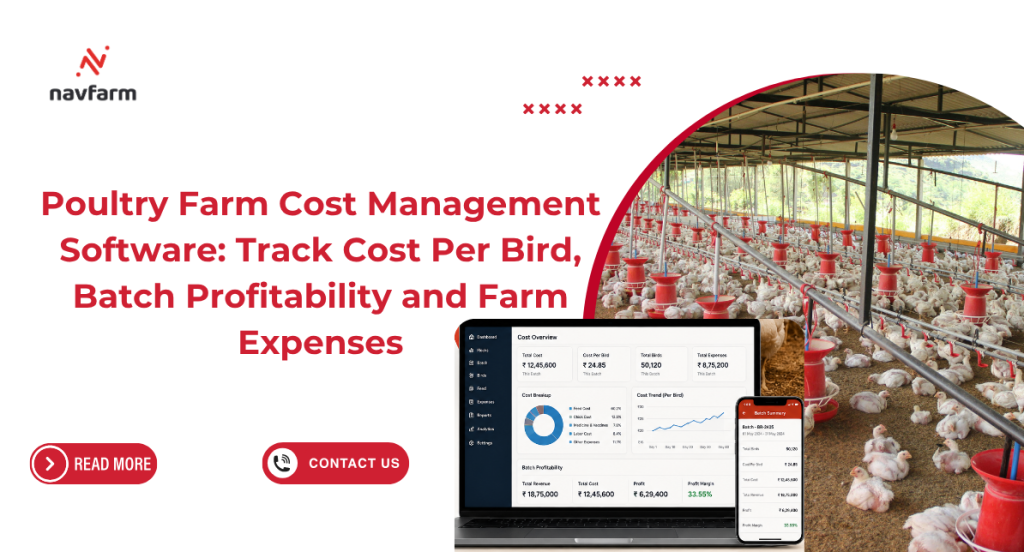
Knowing Your Production Is Not Enough
A poultry business can produce a large number of birds and still struggle to make a good profit.
The reason is simple.
Production quantity tells you how much you produced.
It does not tell you how much it actually cost.
A farm may have good body weight and acceptable mortality, but if feed cost is high, profitability can still suffer.
Another farm may have lower production but better cost control and generate a better margin.
This is why poultry businesses need proper farm costing.
Management needs to know the actual cost of each batch, each farm and, where required, the cost per bird or per kilogram.
Why Poultry Farm Costing Is Difficult
Poultry production involves many different costs.
Feed is usually one of the biggest.
But it is not the only cost.
A farm may also spend money on:
Chicks
Feed
Vaccines
Medicines
Labour
Electricity
Fuel
Water
Litter
Disinfectants
Farm maintenance
Repairs
Transportation
Mortality related losses
Equipment
Other farm expenses
When these expenses are maintained in different spreadsheets, calculating the actual batch cost becomes time consuming.
A poultry costing software can bring these costs together.
Cost Should Be Calculated Batch Wise
Batch is one of the most useful levels for poultry costing.
Each batch has its own:
Placement quantity
Feed consumption
Mortality
Medication
Vaccination
Labour
Production period
Bird weight
Sales quantity
Production cost
This allows management to understand how each batch performed financially.
Instead of asking only whether the farm produced 50,000 birds, management can ask whether that particular batch made the expected margin.
Cost Per Bird Gives a Simple View
Cost per bird is an important measure for poultry businesses.
The calculation can include the total cost of raising the batch divided by the number of birds produced or sold, depending on the business process.
Management can compare cost per bird between:
Farms
Batches
Production cycles
Locations
Breeds
Periods
This can quickly highlight differences in farm performance.
Cost Per Kg Can Be Even More Useful
For broiler operations, cost per kilogram can provide a more useful comparison because bird weights can vary.
Two farms may have similar cost per bird but different average body weights.
Comparing cost per kg helps management understand the actual cost of producing live weight.
This can be reviewed alongside:
FCR
Average body weight
Mortality
Feed cost
Selling price
Gross margin
Feed Cost Has a Major Impact On Batch Profitability
Feed often represents a major part of poultry production cost.
If feed consumption increases, batch cost increases.
If feed prices increase, batch cost also increases.
This is why feed cost should be connected directly with batch costing.
Management should be able to see:
Total feed consumed
Feed cost
Feed cost per bird
Feed cost per kg
FCR
Planned feed cost
Actual feed cost
This makes it easier to understand the financial impact of feed performance.
Chick Cost Should Be Included in Batch Costing
The cost of chicks is another major component.
The system should be able to connect the chicks placed into a batch with their purchase or production cost.
For integrated poultry businesses, this may also include information from the hatchery.
This allows management to see the actual starting cost of the batch rather than adding chick cost manually later.
Mortality Has a Financial Impact
Mortality is usually discussed as a percentage.
But mortality also has a financial impact.
When birds die, the business has already spent money on those birds.
Feed, medicine, labour and other costs may already have been incurred.
Therefore, mortality should be considered when reviewing batch profitability.
A good poultry costing system can connect mortality information with the overall batch cost.
Medicine And Vaccine Costs Should Be Tracked
Medicine and vaccination expenses can vary between batches.
If one batch requires significantly higher medication costs than another, management should be able to see the difference.
This information can be reviewed alongside:
Mortality
Growth
FCR
Disease events
Production cost
Farm location
This gives management a better understanding of how health related expenses is affecting profitability.
Farm Expenses Should Not Stay Outside the Batch Cost
Some expenses are easy to forget when calculating poultry production cost.
For example:
Electricity
Diesel
Water
Litter
Cleaning materials
Disinfectants
Repairs
Maintenance
Labour
These expenses may not be directly attached to individual birds, but they still affect the cost of running the farm.
The costing system should provide a practical way to allocate relevant expenses to farms and batches.
Labour Cost Can Affect Farm Profitability
Labour requirements can vary between farms.
Some farms may have automated equipment.
Others may require more manual work.
Labour cost should therefore be considered when comparing farm profitability.
Management can review labour cost by:
Farm
Batch
Period
Production cycle
This can help identify where operating costs are higher than expected.
Actual Cost Should Be Compared with Planned Cost
A production plan normally includes an expected cost.
Once the batch is completed, the actual cost can be calculated.
The difference between planned and actual cost is important.
For example:
Planned feed cost was lower than actual.
Medicine cost was higher than expected.
Mortality increased the cost per surviving bird.
Labour cost exceeded the budget.
This variance tells management where the original assumptions were different from reality.
Cost Variance Can Help Management Find Problems
Cost variance should not simply be reported at the end of the batch.
It can be monitored during production.
If feed consumption is already above the expected level, management can investigate before the batch is completed.
If medicine expenditure is unusually high, the farm team can review the situation.
If mortality is increasing, the financial impact can also be considered.
This makes costing useful for management decisions rather than just financial reporting.
Farm Wise Profitability Gives a Better Picture
A business may operate many poultry farms.
Some farms may consistently produce better margins than others.
Farm wise profitability reporting can help compare:
Revenue
Production quantity
Feed cost
Chick cost
Medicine cost
Labour
Other expenses
Total cost
Profit
Margin
This can help management identify the farms that need operational improvement.
Batch Profitability Shows What Really Happened
Batch profitability can bring all the important information together.
For a completed batch, management may want to see:
Birds placed
Birds sold
Mortality
Average body weight
Feed consumed
FCR
Total production cost
Cost per bird
Cost per kg
Sales value
Gross profit
Gross margin
This gives a much clearer picture than looking at production and finance reports separately.
Sales Price Also Affects Batch Profitability
Cost is only half of the profitability equation.
The selling price also matters.
If market prices fall while production costs remain high, margins can reduce quickly.
A poultry ERP can connect production cost with sales information so management can review profitability using actual selling prices.
This is particularly useful for businesses selling through different customers, markets or channels.
Customer And Market Wise Profitability
Not every customer generates the same margin.
Different customers may have different:
Selling prices
Volumes
Transportation costs
Payment terms
Discounts
Order requirements
Management can review profitability by customer or sales channel where the required information is available.
This helps the business understand which sales are contributing most to the bottom line.
Cost Management Should Connect Farm Operations and Finance
Farm managers focus on birds and production.
Finance teams focus on expenses and accounting.
Management needs both.
If farm data and financial data are maintained separately, someone has to combine them manually.
A connected poultry ERP can link operational information with financial transactions.
For example:
Feed issued to a batch
Medicine consumed
Chicks placed
Farm expenses recorded
Birds produced
Finished goods sold
Revenue received
These transactions can contribute to a more complete view of batch profitability.
Cost Per Bird Should Not Be the Only KPI
Cost per bird is useful, but it should be viewed alongside other measures.
A proper poultry performance report can include:
Cost per bird
Cost per kg
FCR
Mortality
Average body weight
Feed cost
Production cost
Selling price
Gross margin
This prevents management from focusing on one number without understanding the reason behind it.
What Happens When Poultry Costing Is Done in Excel?
Excel can be useful for small calculations.
The difficulty starts when the business operates several farms and batches.
One person may maintain feed cost.
Another may maintain medicine.
Another may maintain farm expenses.
Finance may have the actual purchase values.
At the end of the batch, someone has to bring everything together.
This takes time and can also create differences between reports.
A poultry farm costing system reduces this manual work by connecting the transactions as they happen.
Mobile Farm Data Can Improve Cost Visibility
Farm teams can record operational information directly from the farm.
This may include:
Feed consumption
Mortality
Bird count
Medication
Vaccination
Production
Farm expenses
Other operational activities
When this information is captured regularly, the costing process has better source data.
Management Dashboards Can Show Cost Trends
A management dashboard can provide a quick view of cost performance.
For example:
Cost per bird by farm
Cost per kg by batch
Feed cost trend
FCR trend
Mortality trend
Batch profitability
Farm profitability
Actual versus planned cost
This helps management identify changes early.
NAVFarm Supports Poultry Farm Cost Management
NAVFarm is designed to connect poultry farm operations with costing, inventory, production planning and financial management.
The system can support batch-wise cost tracking across areas such as:
Chick cost
Feed cost
Medicine
Vaccination
Labour
Farm expenses
Production
Mortality
Inventory
Sales
Batch profitability
Farm profitability
Management reporting
Because NAVFarm works with Microsoft Dynamics 365 Business Central, operational information can be connected with purchasing, inventory, sales and financial transactions.
This helps reduce the need to prepare separate costing files at the end of every production cycle.
Costing Can Start During the Batch
A useful poultry costing system should not wait until the batch is completed.
Management should be able to see the estimated current cost during production.
For example, if a batch is only halfway through its production cycle, management can still review:
Current feed cost
Current mortality
Current medicine cost
Current labour cost
Current production
Estimated final cost
This allows the business to take corrective action while the batch is still running.
Forecast Final Batch Cost
Current production data can also help estimate where the batch is heading.
If feed consumption is already higher than planned, the estimated final cost can be adjusted.
If mortality is higher than expected, the estimated cost per surviving bird can change.
This gives management an early warning rather than waiting until the final batch costing is prepared.
Cost Management Can Improve Production Decisions
Good costing information is not only useful for finance.
It can influence production decisions.
Management can decide:
Which farms need attention
Which batches are performing well
Where feed cost is high
Where mortality is affecting profitability
Whether production targets are realistic
Whether additional investment is justified
Whether certain customers are commercially attractive
Whether the production plan should be changed
This is where poultry costing becomes a management tool rather than just an accounting exercise.
What To Look for in Poultry Costing Software
Before selecting poultry farm costing software, businesses should check whether it can connect:
Farm
Batch
Birds
Feed
Medicine
Vaccination
Labour
Farm expenses
Inventory
Production
Sales
Costing
Profitability
Finance
The system should also support multiple farms, locations and production cycles if the business operates at scale.
Frequently Asked Questions
What is Poultry Farm Cost Management Software?
Poultry Farm Cost Management Software helps businesses track production expenses and calculate the cost of raising birds at farm, batch, bird and kilogram levels.
What costs should be included in poultry batch costing?
Common costs include chicks, feed, medicine, vaccines, labour, electricity, fuel, litter, maintenance, transportation and other farm operating expenses.
Can poultry software calculate cost per bird?
Yes. The system can calculate cost per bird using the relevant batch production and expense information.
Can poultry software calculate cost per kg?
Yes. Cost per kg can be calculated using the production cost and actual live or finished weight, depending on the business process.
Can poultry costing software calculate batch profitability?
Yes. When production costs and sales information are connected, the business can review revenue, cost and profitability by batch.
Can NAVFarm integrate costing with finance?
Yes. NAVFarm works with Microsoft Dynamics 365 Business Central, allowing farm operations, inventory, purchasing, sales and financial information to work together.
Better Poultry Costing Starts with Better Operational Data
A poultry business cannot manage profitability properly if it does not know its actual production cost.
Feed, chicks, medicine, labour and farm expenses all contribute to the final cost.
The important part is bringing these costs together with the actual performance of each batch.
When management can see cost per bird, cost per kg, FCR, mortality, production and sales value together, it becomes much easier to understand what is driving profit and what is reducing it.
NAVFarm connects poultry farm operations, batch costing, inventory, production and financial information in one environment.
For poultry businesses that are still preparing batch costing manually in Excel, moving to a connected poultry farm management and costing system can provide better visibility and reduce the time spent preparing reports.
Explore NAVFarm to see how farm operations, batch costing, profitability and finance can work together in one poultry management platform.
Book a Free Demo