Pradeep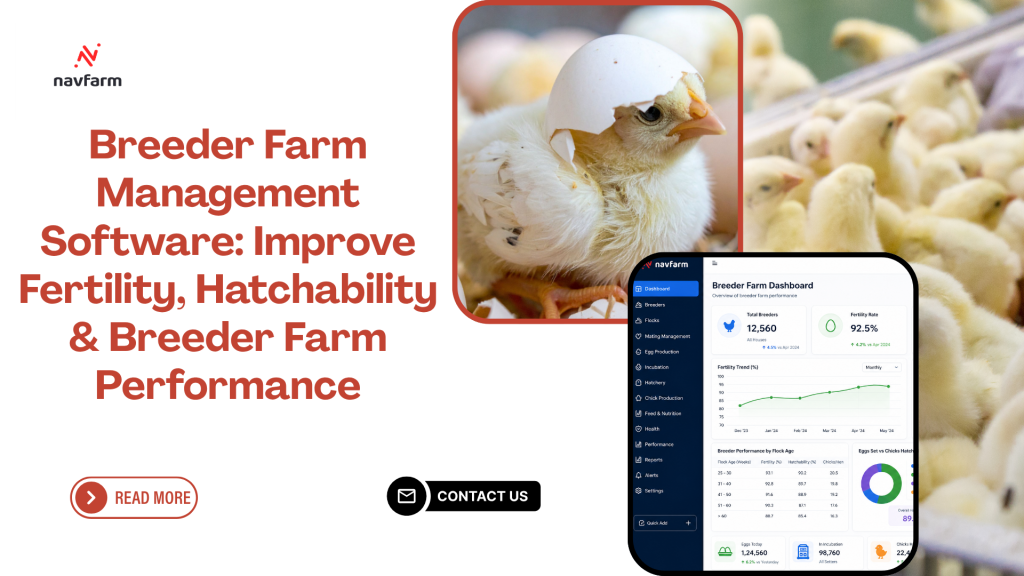
Every Healthy Chick Starts With a Well-Managed Breeder Farm
When people talk about poultry production, the conversation usually focuses on broiler performance, egg production or feed costs.
Very few people talk about breeder farms.
Yet every successful broiler and layer operation depends on strong breeder performance.
Healthy parent birds produce quality hatching eggs.
Quality hatching eggs improve hatchability.
Better hatchability produces stronger chicks.
Stronger chicks can perform better throughout the production cycle.
In other words, problems seen on a broiler farm can often begin much earlier at the breeder farm.
That is why breeder management is one of the most important parts of an integrated poultry business.
Managing breeder farms, however, is very different from managing broilers or commercial layers. Every decision affects not only the current flock but also the quality and performance of the next generation.
As poultry companies continue to expand, breeder farm operations require better planning, better monitoring and faster decision-making.
A connected ERP for Poultry Farm solution can help bring production, health, egg collection, hatchery planning and operational reporting together on one platform.
Breeder Farms Need a Different Approach
Running a breeder farm is not simply about feeding birds and collecting eggs.
Every day, production teams have to balance several factors at the same time.
Bird body weight.
Male-to-female ratio.
Uniformity.
Feed allocation.
Lighting programme.
Egg production.
Fertility.
Hatchability.
Vaccination schedules.
Environmental conditions.
Each of these factors influences the others.
A small variation in body weight today may affect egg production next month.
Poor flock uniformity can reduce fertility.
Delayed vaccination can affect bird health.
Incorrect feed allocation may lower hatchable egg production.
This is why breeder farms require continuous monitoring rather than occasional reporting.
Managing Breeder Farms Through Excel Eventually Becomes a Problem
Almost every poultry company starts with manual records.
Daily production is entered in registers.
Egg collection is noted on paper.
Feed consumption is updated in spreadsheets.
Farm supervisors send reports to the head office.
Initially, this may seem manageable.
But as the business grows, so does the complexity.
One company may operate five breeder farms.
Another may manage fifty.
Some businesses have farms spread across different states.
By the time daily reports reach management, several hours may have already passed.
Production managers spend more time collecting information than analysing it.
Different departments maintain different reports.
Numbers do not always match.
Simple questions become difficult to answer.
Which farm is producing the highest percentage of hatchable eggs?
Which flock has lower fertility?
Where has mortality increased?
Which houses are due for vaccination this week?
How many hatching eggs will be available next week?
When information is scattered across multiple files, finding accurate answers becomes time-consuming.
Every Day Matters in a Breeder Farm
Unlike many other farming operations, breeder farms generate information every day that influences future production.
Daily records are not maintained only for reporting purposes.
They help management understand whether the flock is performing according to plan.
Some of the most important daily activities include:
- Feed consumption
- Water consumption
- Mortality
- Male mortality
- Female mortality
- Body weight
- Uniformity
- Egg production
- Hatchable eggs
- Floor eggs
- Dirty eggs
- Cracked eggs
- Culling
- Environmental observations
- Vaccination
- Medicine usage
Looking at these figures individually rarely provides the complete picture.
The real value comes from understanding how they are connected.
For example, a reduction in water intake may be followed by lower feed consumption.
Lower feed intake can affect body weight.
Body weight influences egg production.
Egg production affects hatchable egg availability.
Hatchable egg availability determines chick production.
Everything is connected.
Good Decisions Depend on Accurate Information
Experienced farm managers can often identify problems before they become serious.
But experience alone is no longer enough.
Large poultry businesses require accurate information from every farm, every day.
Management should not have to wait until tomorrow to know today’s performance.
If fertility begins to decline…
If feed consumption suddenly changes…
If mortality starts increasing…
If egg production falls below target…
The production team should know immediately.
The sooner a problem is identified, the easier it becomes to correct.
Fertility Is One of the Most Important Performance Indicators
Every breeder farm aims to produce fertile eggs that deliver healthy chicks.
A flock may produce a large number of eggs, but if fertility is low, the hatchery cannot achieve its production targets.
This creates a chain reaction across the business.
Lower fertility means fewer chicks.
Fewer chicks affect broiler placements.
Processing schedules change.
Customer commitments become difficult to fulfil.
That is why fertility should never be viewed as just another report.
Management needs to analyse fertility alongside:
- Male-to-female ratio
- Bird age
- Body weight
- Feed programme
- Lighting schedule
- Vaccination history
- Farm environment
Only then can the real causes of declining fertility be understood.
Hatchable Eggs Are More Valuable Than Total Eggs
Not every egg collected from a breeder farm is suitable for incubation.
Some eggs are too small.
Some are cracked.
Others are dirty or laid on the floor.
The focus should always be on increasing the percentage of hatchable eggs rather than simply increasing total egg production.
A small improvement in hatchable egg percentage can significantly increase chick output over an entire production cycle.
This is why breeder farms monitor:
- Nest eggs
- Floor eggs
- Dirty eggs
- Cracked eggs
- Double-yolk eggs
- Cull eggs
- Hatchable eggs
Understanding these numbers helps management improve farm practices while reducing unnecessary losses.
Better Visibility Leads to Better Breeder Performance
Successful breeder farms do not rely on guesswork.
They rely on timely information.
When production managers have access to accurate daily data, they can identify trends, compare farm performance and make decisions before problems become expensive.
The goal is not to collect more reports.
The goal is to improve breeder performance, produce more hatchable eggs and supply healthier chicks to the hatchery.
That is where modern breeder farm management software becomes an important part of the business.
Egg Collection Is Not Just About Quantity. It Is About Quality.
Every egg collected from a breeder farm carries a different value.
Some eggs will produce healthy chicks.
Some will never reach the hatchery.
The difference often comes down to how eggs are handled from the moment they are laid.
Collecting eggs on time, storing them correctly and identifying quality issues early all play an important role in improving hatchability.
Many farms record only the total number of eggs collected each day.
That tells only part of the story.
A production manager needs much more information to understand how the flock is performing.
Questions like these matter every day:
- How many nest eggs were collected?
- How many floor eggs were found?
- Are cracked eggs increasing?
- Is the percentage of dirty eggs higher than usual?
- How many eggs are suitable for incubation?
- Which houses are producing the best quality eggs?
When this information is available every day, small operational issues can be corrected before they begin affecting hatchery performance.
Every Egg Should Be Accounted For
Imagine a breeder farm producing 45,000 eggs every day.
By the time those eggs are collected, graded, stored and transported to the hatchery, thousands of eggs have moved through different teams.
Without proper tracking, simple questions become surprisingly difficult.
How many eggs were collected today?
How many reached the egg store?
How many were rejected?
How many were transferred to the hatchery?
How many are still in storage?
If every department maintains separate records, differences begin to appear.
Operations spend valuable time reconciling numbers instead of improving production.
A connected system allows every egg movement to be recorded once and tracked throughout its journey.
That improves visibility and reduces manual reconciliation.
Egg Storage Plays a Bigger Role Than Many People Realise
Good-quality eggs can lose their value if they are not stored correctly.
Storage conditions directly affect hatchability.
Temperature.
Humidity.
Storage duration.
Handling practices.
All of these influence chick quality.
For this reason, breeder farms should know exactly:
- When eggs were collected.
- Where they are stored.
- How long they have remained in storage.
- When they should be transferred to the hatchery.
Keeping this information organised becomes increasingly important as production volumes grow.
Planning Egg Transfers Should Never Be Last Minute
Moving eggs from the breeder farm to the hatchery is not simply a transport activity.
The hatchery plans setter capacity based on expected egg arrivals.
Transport teams schedule vehicles.
Production teams prepare future placements.
A delay in one area affects several others.
If breeder farms and hatcheries work independently, planning becomes reactive.
When they work from the same production schedule, everyone knows what is expected over the coming days.
This improves coordination and reduces unnecessary delays.
Fertility Numbers Become More Valuable When You Compare Them
Every breeder farm tracks fertility.
The real benefit comes from understanding why fertility changes.
Suppose one flock reports 93% fertility.
Another reports 89%.
The first reaction is usually to investigate the lower-performing flock.
But there is another question worth asking.
Why is the first flock performing better?
Has body weight been managed more effectively?
Is flock uniformity stronger?
Are lighting programmes different?
Has feed allocation been more consistent?
Comparing successful farms often provides more valuable lessons than focusing only on farms that are struggling.
Hatchability Starts Long Before Eggs Reach the Hatchery
People often associate hatchability with hatchery management.
In reality, hatchability begins on the breeder farm.
The condition of the parent birds.
Egg handling.
Storage practices.
Transport conditions.
All influence hatchery performance.
A hatchery cannot recover quality that was lost before the eggs arrived.
This is why breeder farm teams and hatchery teams should work towards the same production goals instead of operating as separate departments.
Uniform Birds Produce More Predictable Results
Uniformity is one of the most closely monitored areas in breeder management.
When birds grow at different rates, managing the flock becomes more difficult.
Feed distribution becomes less effective.
Body weight targets become harder to achieve.
Egg production may become inconsistent.
Fertility can also be affected.
Regular body weight measurements help production teams understand whether birds are developing according to the planned growth curve.
More importantly, comparing body weight across different houses allows managers to identify variations before they become larger production issues.
Male Management Is Just as Important as Female Management
Breeder farm discussions often focus on female birds because they produce the eggs.
However, male bird performance has an equally important influence on fertility.
Management teams need clear visibility into:
- Male bird numbers
- Male mortality
- Male body weight
- Male-to-female ratio
- Replacement planning
- Male health status
Ignoring these indicators can directly affect fertility across the flock.
Successful breeder farms monitor both male and female performance throughout the production cycle.
Vaccination Records Should Support Future Decisions
Vaccination programmes are carefully planned in breeder operations.
Recording that activity should be just as organised.
Months later, management may need to review:
- Which flock received a particular vaccine?
- When was it administered?
- Who completed the vaccination?
- Were there any observations afterwards?
Searching through paper registers for this information wastes valuable time.
Maintaining digital health records creates a complete history for every flock, making audits, investigations and future planning much easier.
Feed Planning Is About Consistency, Not Just Quantity
Feed management in breeder farms is very different from feed management in broiler operations.
The objective is not rapid growth.
The objective is maintaining the correct body condition throughout the production cycle.
Too little feed affects bird health and egg production.
Too much feed may lead to overweight birds and lower fertility.
Daily feed planning should therefore consider:
- Bird age
- Body weight
- Production stage
- Flock performance
- Feed availability
- Future feed requirements
When production teams have accurate information every day, feed decisions become much more consistent across all farms.
Better Breeder Management Creates Better Results Across the Entire Business
The success of a breeder farm is measured not only by today’s egg production but by the quality of chicks that eventually reach commercial farms.
Every improvement made at the breeder level creates benefits further down the production chain.
Higher fertility.
Better hatchability.
Healthier chicks.
Improved broiler performance.
More predictable production.
Ultimately, stronger breeder management contributes to better business performance across the entire poultry operation.
Managing a Breeder Farm Is Only One Part of the Business
A breeder farm does not operate in isolation.
Every egg collected today influences tomorrow’s hatchery schedule.
Every fertile egg affects chick availability.
Every chick produced affects broiler placements or commercial layer planning.
A small change at the breeder farm can have an impact across the entire poultry business.
That is why successful poultry companies do not manage breeder farms as separate units.
They connect breeder operations with hatcheries, feed mills, procurement, production planning, sales and finance.
When every department works from the same information, planning becomes easier and decisions become faster.
For businesses managing different animal operations, livestock management software can also help maintain connected operational information across the wider business.
Planning Tomorrow Starts with Understanding Today
One of the biggest challenges for poultry companies is not recording today’s production.
It is planning what needs to happen next.
Questions like these are common in every integrated poultry business:
- Will there be enough hatchable eggs next week?
- Can the hatchery meet the planned chick requirement?
- Which breeder farms are approaching peak production?
- Which flocks are moving beyond peak production?
- Do we have enough parent stock to support future demand?
- Will feed production be sufficient for the coming month?
Answering these questions through spreadsheets becomes difficult as operations grow.
Production managers need visibility into what is happening today and what is likely to happen over the coming weeks.
Forecasting Hatchable Egg Production Helps Businesses Plan Better
Breeder flocks follow a predictable production pattern.
Egg production increases after the laying period begins.
It reaches peak production.
Then it gradually declines with age.
Because this production cycle is well understood, poultry businesses can estimate future hatchable egg availability with a good level of confidence.
This information becomes valuable for several departments.
The hatchery knows how many eggs are likely to arrive.
Production teams understand future chick availability.
Feed mills can estimate feed demand.
Procurement teams can plan raw material purchases.
Management gains better visibility into future production instead of relying only on daily reports.
Forecasting does not eliminate uncertainty, but it allows businesses to prepare much earlier.
Chick Production Planning Begins at the Breeder Farm
Every hatchery has one objective.
Produce the required number of healthy chicks at the right time.
That planning starts long before eggs reach the setter.
It begins with breeder performance.
Expected hatchable eggs.
Fertility trends.
Historical hatchability.
Expected chick output.
When these figures are available in advance, hatchery managers can plan their operations much more effectively.
Instead of reacting to daily egg availability, they work with production forecasts that support better capacity utilisation.
Customer Demand Should Influence Production Planning
Many poultry businesses still produce chicks based on estimates.
Later, the sales team tries to find customers.
A better approach is to reverse that process.
Customer demand should guide production planning.
Distributors often share expected requirements.
Large poultry farms confirm future placements.
Contract growers provide advance schedules.
Historical sales patterns also help estimate future demand.
When customer demand is connected with breeder planning, businesses gain much better control over production.
They avoid unnecessary shortages.
They also reduce the risk of producing more chicks than the market requires.
Production becomes more predictable for every department involved.
Farm Capacity Planning Should Never Depend on Memory
As breeder operations expand, planning future placements becomes increasingly complex.
Management needs to know much more than whether a poultry house is empty.
Questions such as these become important:
Has the current flock completed production?
Has depopulation been completed?
Has the house been cleaned and disinfected?
Is the required downtime complete?
How many birds can the house accommodate?
Is the equipment ready?
Is manpower available?
Managing all this information manually often leads to planning delays.
A structured farm capacity plan allows production teams to prepare future placements well before birds arrive.
That improves resource utilisation while reducing last-minute changes.
GP, Parent Stock and Commercial Production Should Remain Connected
Integrated poultry businesses manage different stages of bird production.
Grand Parent (GP).
Parent Stock (PS).
Commercial Broilers.
Commercial Layers.
Although each stage has its own production objectives, they all depend on one another.
Poor planning at the GP level affects Parent Stock.
Parent Stock performance influences chick availability.
Chick availability affects commercial production.
Managing these stages independently creates unnecessary gaps.
Connecting them through a common planning process gives management a much clearer picture of future production capacity.
Mobile Recording Makes Daily Operations Simpler
Farm supervisors spend most of their time inside poultry houses.
They should not have to return to the office every evening just to prepare reports.
Recording information through a mobile application allows production data to be captured while work is being carried out.
Daily egg production.
Feed consumption.
Water intake.
Mortality.
Body weight.
Medicine.
Vaccination.
Farm observations.
Once entered, the information becomes immediately available to production managers and senior management.
There is no need to enter the same information again in Excel or prepare separate reports.
This saves time and improves data accuracy.
One Platform Creates Better Coordination Across the Business
As poultry companies grow, different departments often begin using different systems.
Breeder farms maintain one report.
The hatchery uses another.
Feed production follows a separate spreadsheet.
Sales manages customer orders independently.
Finance receives production figures several days later.
Over time, these disconnected systems create unnecessary duplication.
The same information is entered multiple times.
Different reports show different numbers.
Management spends time verifying data instead of making decisions.
A connected poultry management platform allows every department to work from the same operational information.
Production, hatchery, feed mill, warehouse, procurement, sales and finance remain connected throughout the production cycle.
Information entered once becomes available wherever it is needed.
For businesses that also manage other agricultural operations, Crop Management Software can help connect production information beyond poultry.
NAVFarm Connects the Complete Poultry Value Chain
NAVFarm has been designed to support poultry businesses beyond day-to-day farm recording.
It connects breeder farms with hatchery planning, feed production, inventory management, procurement, sales, customer order management, production forecasting and financial management on a single platform.
Because NAVFarm is built on Microsoft Dynamics 365 Business Central, businesses can also benefit from integrated inventory, purchasing, warehouse management, finance, taxation, CRM, approvals, mobile applications and Power BI dashboards.
For businesses operating across multiple agricultural sectors, connected solutions such as ERP software for dairy industry and Aqua Management Software can support related production and management requirements.
Instead of waiting for reports from different departments, management has access to information that supports faster planning and better operational decisions.
The objective is not simply to digitise records.
It is to help poultry businesses improve coordination, reduce manual work and make informed decisions based on reliable information.
Better Breeder Management Creates a Stronger Poultry Business
A breeder farm is the starting point of a much larger production chain.
Its performance influences hatchable egg availability, hatchery output, chick quality, commercial placements and ultimately customer commitments.
Managing breeder operations effectively therefore requires more than daily data entry.
Businesses need accurate flock information, reliable egg records, fertility analysis, feed planning, health history, hatchery coordination and future production forecasts.
When these areas are connected, management can identify problems earlier, plan future production more accurately and coordinate different departments more effectively.
The result is better visibility from breeder performance through to commercial poultry production.
That is the real value of connected breeder farm management.
Agri ERP & Farm Management Software Experts
Website: www.consultingprudence.com
Mail: paul.young@prudencesoftech.com
Call: +91-8789573094